Blog


Industrial Pumps in UAE – Engineering Selection & Best Practices

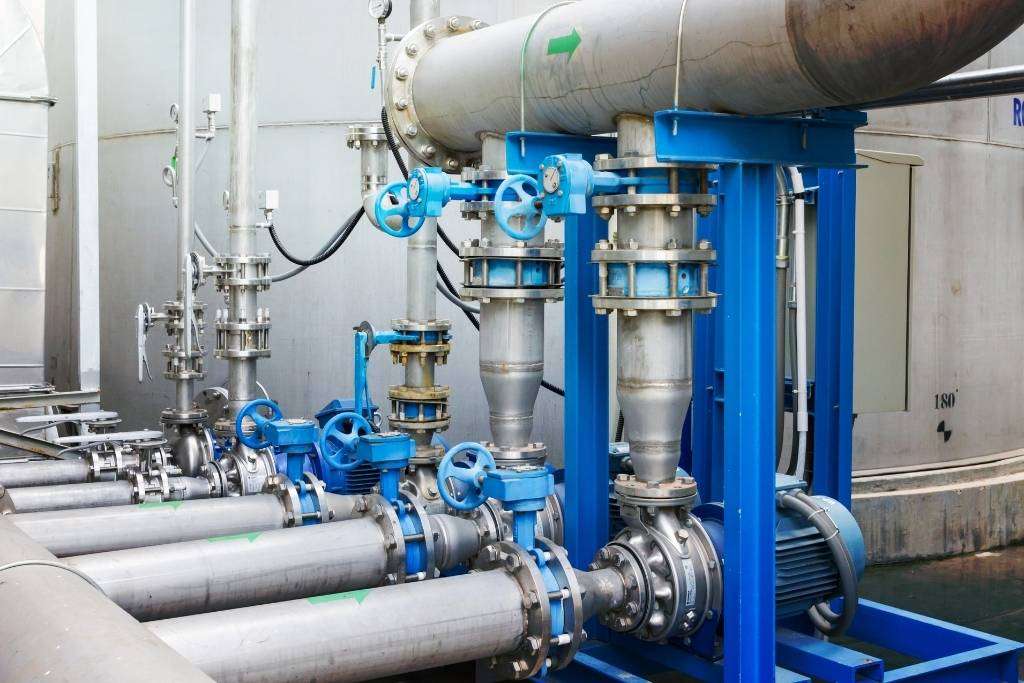
Industrial pumps move potable water, service water, drainage, and sewage across the UAE’s built environment. Accurate hydraulics—flow, total head, NPSH, efficiency, and control—determine uptime and lifecycle cost. This guide by Piranhaecotech is a pump-only reference covering working principles, selection math, NPSH & BEP, impellers, materials & sealing, VFD strategies, installation, commissioning, and reliability.

Table of Contents

  1. Pump Families & Working Principles
  2. Selection Math: Duty Point, Curves & System Behavior
  3. NPSH & Cavitation Avoidance
  4. Impellers, Hydraulics & Efficiency
  5. Materials, Seals & Construction
  6. Motors, VFDs & Affinity Laws
  7. Installation, Commissioning & Reliability
  8. FAQs

1) Pump Families & Working Principles

Most UAE facility applications are served by rotodynamic (centrifugal) pumps and specialized submersibles for drainage and sewage. Positive-displacement pumps exist for dosing/viscous media but are out of scope here.

1.1 Centrifugal Pumps

Principle: The impeller imparts velocity to the liquid; the casing converts velocity to pressure head. Suited to moderate-to-high flows and low-to-medium heads.

  • End-suction: Compact, economical; widely used for utility transfer and closed-loop circulation.
  • Horizontal split-case: Two-piece casing for easy seal/bearing access; stable at high flows with improved NPSH behavior.
  • Multistage (centrifugal): Multiple impellers in series for higher head where single-stage pumps are insufficient.

1.2 Inline / Circulating Pumps

Principle: Suction and discharge are colinear, simplifying installation in risers and tight rooms. Many models use IE3/IE4 or EC motors for quiet, efficient 24/7 duty.

1.3 Booster Pump Sets

Principle: Two or more pumps in parallel maintain target discharge pressure. Pressure transducers with VFDs modulate speed; duty–assist–standby logic provides staging and redundancy.

1.4 Drainage Pumps

Principle: Usually submersible with open/semi-open impellers to pass small solids. Level devices (floats or ultrasonic) automate start/stop for storm-water and basement sumps.

1.5 Submersible Pumps

Principle: Motor and hydraulics are submerged. Double mechanical seals with an oil chamber are common; cable glands and IP ratings are critical. Ideal where flooded suction is inherent or space is limited.

1.6 Sewage Pumps

Principle: Vortex or channel impellers provide large free passage to reduce clogging; grinder variants macerate solids to allow smaller-bore force mains. Typical in lifting stations and STPs.

1.7 Fire-Fighting Pumps

Principle: Dedicated diesel/electric fire pumps deliver code-mandated flow and head; a jockey pump maintains system pressure. Commissioning follows NFPA/civil-defense requirements.

2) Selection Math: Duty Point, Curves & System Behavior

The selection baseline is the duty point—required flow (Q) and total head (H) at design conditions. Total head combines static lift and friction losses (pipe, fittings, strainers, valves, and special items). While worst-case sizing is common, verify stable, efficient operation at part load.

2.1 Practical Sizing Steps

  1. Define Q: L/s or m³/h from connected loads or peak fixture demand.
  2. Compute H: H = Hstatic + Hfriction. Use realistic pipe sizes/velocities (≈1–2 m/s for water mains) and include equivalent lengths for fittings/valves.
  3. Overlay curves: Plot the system curve against candidate pump curves; target operation near BEP.
  4. Check NPSH: Ensure NPSHA > NPSHR + margin at all expected operating points.
  5. Motor margin: If duty is close to motor limits (temperature/viscosity), upsize one rating.

2.2 Best Efficiency Point (BEP)

BEP is the flow where hydraulic efficiency peaks. Operating near BEP minimizes radial load, shaft deflection, vibration, and noise—extending seal and bearing life. Running far left/right of BEP accelerates failures.

2.3 System Curve & Control Interaction

The system curve rises ~Q² due to friction. With VFD control, both pump curve and duty shift as speed changes. Smart control trims head at part load rather than throttling, improving kW/flow delivered.

3) NPSH & Cavitation Avoidance

NPSHA (Available): Absolute suction head at the eye minus vapor pressure head.
NPSHR (Required): Manufacturer’s minimum to prevent significant cavitation at the stated flow/speed.

  • Keep NPSHA > NPSHR by a practical margin (often 0.5–1.0 m for clean water; more for hot liquids or variable sump levels).
  • Improve NPSHA with flooded suction, lower liquid temperature, and low-loss suction piping.
  • Suction design: straight runs (≥5–10D), long-radius bends, eccentric reducers (flat-on-top), full-bore valves; avoid elbows directly on the nozzle.

Symptoms of cavitation include a “gravel” sound, pitted impellers/casing, seal leakage, and rising vibration.

4) Impellers, Hydraulics & Efficiency

Impeller geometry determines head–flow capability and solids handling:

  • Closed: Highest efficiency; typical in clean-water centrifugal pumps.
  • Semi-open/Open: Tolerates suspended solids with some efficiency penalty; common in drainage duties.
  • Vortex/Channel: Large free passage to avoid clogging in sewage; lower hydraulic efficiency.
  • Grinder: Macerates solids; enables small-bore force mains; verify torque/power.

Trimming & Diameter: Impeller trimming tunes head at a set speed; confirm absorbed power after trim. In multistage units, adding/removing stages adjusts head discretely.

5) Materials, Seals & Construction

UAE projects face salinity, sand, and heat. Choose materials and sealing accordingly:

  • Cast iron: Cost-effective for treated water in closed circuits.
  • Stainless steel 304/316: Potable/mildly aggressive water; 316 improves chloride resistance.
  • Bronze/Brass: Good for hot service components and splash-zone resistance.
  • Duplex SS: Elevated chlorides or harsh wastewater chemistries.

Sealing: Mechanical seals with SiC/SiC or TC/TC faces for abrasion; elastomers (EPDM, NBR, FKM) per medium and temperature. Submersibles often use double mechanical seals with an oil barrier; add dry-run and thermal protection for drainage/sewage pumps.

6) Motors, VFDs & Affinity Laws

Premium motors (IE3/IE4) reduce electrical losses. With VFDs, affinity laws apply:

  • Q ∝ N (speed)
  • H ∝ N²
  • P ∝ N³

Small speed reductions deliver disproportionate kW savings. Use stable control logic (pressure/DP/level) with sensible minimum-speed limits to avoid running far left of BEP.

Control examples

  • Booster sets: Discharge-pressure control with duty/assist staging and auto-rotation balances wear.
  • Circulating pumps: Differential-pressure control with minimum-flow protection stabilizes hydraulics.
  • Drainage/Sewage: Level-based start/stop; duplex duty-standby or duty-assist; high-level alarm.

7) Installation, Commissioning & Reliability

Hydraulic good practice

  • Straight suction runs (≥5–10D); avoid fittings tight to the suction.
  • Eccentric reducers (flat on top) on horizontal suctions prevent air pockets.
  • Isolation, non-return, and strainers as required; flexible connectors to decouple vibration.
  • Accurate base grouting and alignment; poor alignment shortens bearing/seal life.

Electrical & protection

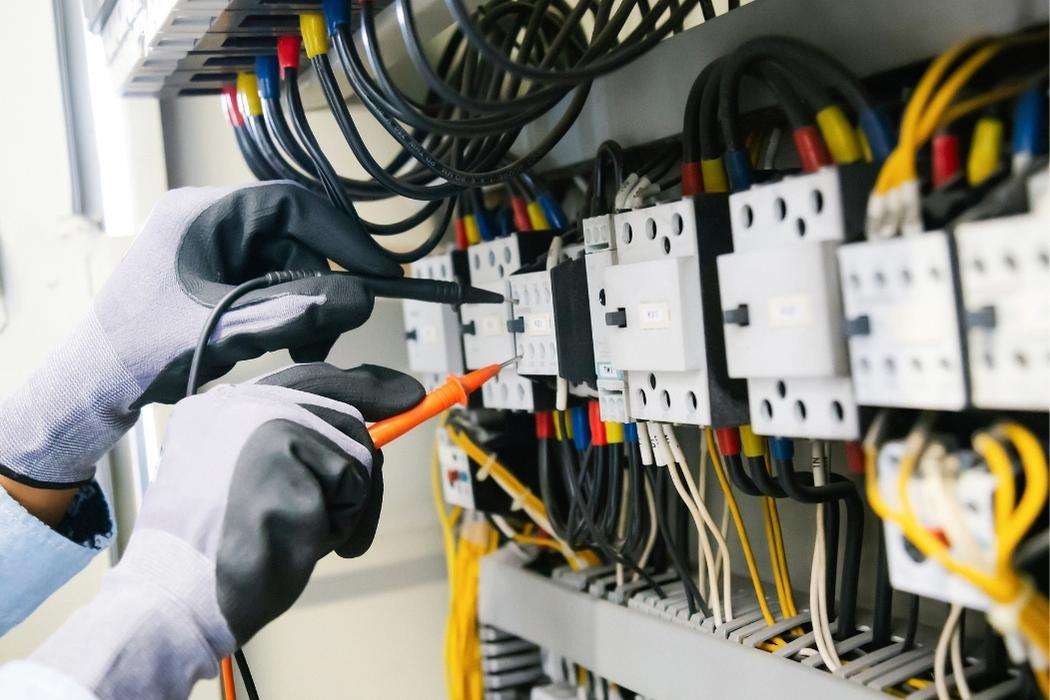
  • Size cables for FLC and voltage drop; confirm thermal/short-circuit protection settings.
  • For VFD duty and long motor leads, consider dv/dt filters or line reactors.
  • Submersibles: verify IP rating, cable gland integrity, and correct strain relief.

Commissioning

  • Flush/clean lines before first start; debris is a common cause of early seal failure.
  • Vent casings and seal chambers; verify rotation; log vibration and current vs nameplate.
  • Balance flows; confirm operating point on the published pump curve.

Reliability & maintenance

  • Trend bearing temperature/vibration, seal leak-off, and motor current to catch issues early.
  • Enable auto-changeover on duplex systems to equalize run hours.
  • Hold critical spares (seals, bearings, gaskets) and document MTBF/interventions.

FAQs (Pump-Only)

Q1. How close to BEP should I select?

Target the design duty within ~10–15% of BEP flow. This minimizes radial loads, noise, and vibration and extends seal/bearing life. With VFDs, also verify part-load stability and a safe minimum speed.

Q2. What NPSH margin is sensible?

Common practice is NPSHA greater than NPSHR by 0.5–1.0 m for clean water. Use higher margins for hot liquids, fluctuating sump levels, or imperfect suction geometry.

Q3. Which impeller style when solids are present?

Use semi-open/open for light solids in drainage; vortex/channel for solids-laden sewage to reduce clogging; grinder impellers when maceration is required for small-bore force mains.

Q4. How do I choose seal faces and elastomers?

SiC/SiC or TC/TC faces for abrasion. EPDM suits many hot-water duties; NBR for general water; FKM (Viton) for higher temperatures/chemicals. Always check compatibility with the exact medium.

Q5. What’s the simplest energy-saving measure?

Pair IE3/IE4 motors with VFDs and sound setpoint logic. Avoid excessive minimum speeds and ensure hydraulics keep the pump operating near BEP across common load conditions.

Conclusion

Reliable pumping systems in the UAE come from getting fundamentals right—accurate Q–H, adequate NPSH margin, BEP-centric selection, appropriate materials/sealing, and smart VFD control—backed by disciplined installation and commissioning. For specifications, datasheets, and engineered selections tailored to your duty point and constraints, speak with Piranhaecotech.

Get Your Tailored HVAC Solution!

Designed & Delivered by Our Expert Team